
Manufacturing Reimagined with Agentic AI

It Is 3 AM at a Steel Plant. Nobody Is Watching. Everything Is Fine. Agentic AI in manufacturing is making scenes like this possible right now. Somewhere on a factory floor, Turbine Unit 7 has just developed a subtle vibration anomaly. No alarm has sounded. No operator has been called. But within milliseconds, an AI agent has already detected the deviation, pulled up the machine’s full maintenance history, predicted a bearing failure 72 hours out, scheduled a maintenance window, ordered the replacement part from an approved supplier, and adjusted the production schedule to minimize downtime. By the time the morning shift arrives, a work order is waiting. The part is on its way. And the line never stopped. This is not science fiction. This is agentic AI in manufacturing, and it is reshaping how the world makes things. What Is Agentic AI in Manufacturing, and Why Does It Matter? Before exploring what it is doing on factory floors, it helps to understand what makes agentic AI different from the tools that came before it. Traditional AI analyzes data and surfaces insights. Generative AI creates content and recommendations. Agentic AI does something fundamentally different: it pursues defined outcomes by coordinating decisions, taking actions, and orchestrating processes across planning, production, and execution, often without any human prompting at each step. MIT Sloan’s explainer on agentic AI offers a thorough breakdown of how these systems work at a technical and organizational level. A standard AI system might tell a plant manager that a conveyor motor is likely to fail within the week. An agentic AI system will schedule the maintenance, notify the supplier, update the ERP, and adjust the shift roster, all as one continuous, autonomous workflow. The difference between insight and action is the difference between knowing your supply chain is at risk and actually rerouting it before the disruption hits. Why 2026 Is the Turning Point for Agentic AI in Manufacturing For years, manufacturers treated AI as something to experiment with. Pilot projects. Proof-of-concept trials. That era is ending fast. Deloitte’s 2026 Manufacturing Industry Outlook predicts agentic AI adoption in manufacturing will grow fourfold by 2026, from 6% to 24%. Gartner forecasts that 40% of enterprise applications will have integrated task-specific AI agents by 2026, compared to less than 5% just a year earlier. IBM found that more than half of supply chain executives surveyed are already deploying AI agents to automate workflows. Three converging pressures explain why agentic AI in manufacturing is no longer optional for serious operators. Supply chain volatility is at historic highs. Geopolitical tensions, tariff uncertainty, and climate-driven disruptions have made quarterly supply chain reviews completely obsolete. Manufacturers need systems that can sense, decide, and act in real time. A generation of expertise is walking out the door. Skilled tradespeople are retiring at scale, taking decades of undocumented knowledge with them. No training program replaces institutional memory at the speed it is being lost. The cost of standing still is rising. The global manufacturing industry loses over $50 billion annually to unplanned downtime and operational inefficiencies. In this environment, a “wait and see” approach to AI is not cautious. It is a risk. Four High-Impact Applications of Agentic AI on the Factory Floor 1. Predictive and Prescriptive Maintenance Traditional maintenance is reactive: something breaks, you fix it. Predictive maintenance was a step forward. Agentic AI goes further still, into prescriptive maintenance. An agentic system does not just predict when a failure will occur. It specifies the part, the timeframe, and the exact action required, then takes that action autonomously. A ceramics manufacturer using a multi-agent predictive maintenance framework achieved 94% predictive accuracy, a 67% reduction in false positives, and a 43% decrease in unplanned downtime, with a payback period of just 1.6 years. What makes this possible is how these agents learn. Unlike rule-based systems that fire alerts when readings cross a fixed threshold, agentic AI learns the unique personality of each individual machine. Pump A might run hot but reliably. Pump B shows early stress through subtle acoustic changes. The agent understands the difference. A fixed-threshold system would miss one, or overfire on the other. 2. AI-Powered Quality Control Human inspectors are skilled, but fatigue and the sheer volume of a modern production line make consistent quality control at scale nearly impossible. Computer vision agents can inspect every single unit at full production speed. They detect microscopic cracks, color deviations as small as 0.1%, and dimensional variations measured in thousandths of an inch. They flag issues, route defective products, and feed data back into the process so root causes are addressed, not just symptoms. Boeing provides a compelling real-world example. Facing quality challenges across one of the world’s most complex production environments, the company introduced AI-driven inspections and digital twins for its 787 Dreamliner program. The result was a significant reduction in defects and assembly times cut nearly in half. 3. Autonomous Supply Chain Orchestration The supply chain is where agentic AI in manufacturing may deliver its most dramatic near-term value. Consider what happens when a tariff change affects a key component. In a traditional operation, a procurement manager discovers the issue, escalates it, convenes meetings, and waits for approvals. The process takes days. Production is at risk. An agentic system handles the same event differently. It detects the regulatory change, evaluates the full bill of materials at a component level, scores alternative suppliers against price, lead time, and reliability, and begins rerouting orders, all within minutes. Deloitte’s agentic supply chain report found that AI agents can autonomously trigger supplier follow-ups, adjust schedules, and update work orders without a human touching the process at each step. Gartner estimates that by 2030, around 50% of cross-functional supply chain management solutions will use intelligent agents for autonomous decision-making. The manufacturers building that capability today are not just solving today’s problems. They are building a structural advantage. 4. Capturing and Transferring Expert Knowledge One of the most urgent and underappreciated applications of agentic AI in manufacturing
AI in Retail in 2025: Key Shifts That Changed the Industry
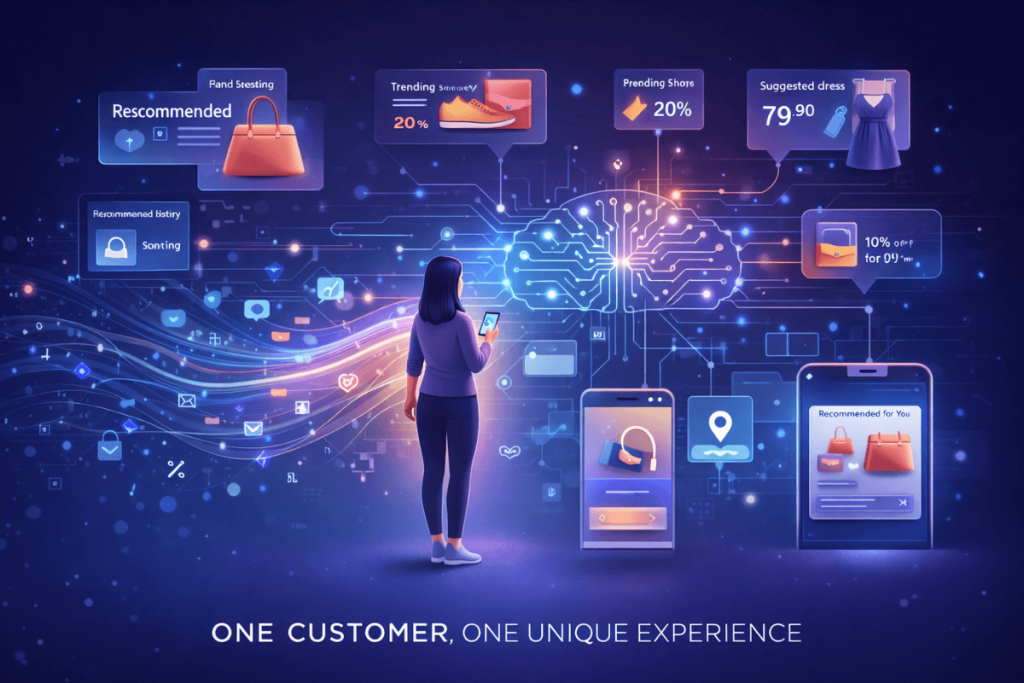
AI in retail reached a defining moment in 2025. Artificial Intelligence stopped being a future investment or an experimental layer. It became part of everyday retail operations, quietly influencing decisions across pricing, inventory, personalization, fulfillment, and customer experience. What made this year different was not the novelty of AI. It was the way retailers started using it. At Netwin, working closely with retail teams on digital transformation, data platforms, and software product engineering, we saw that retailers that treated AI as infrastructure saw measurable gains, while those treating it as a side project struggled to scale impact. This blog is a reflection on the most meaningful AI-driven shifts we observed in retail throughout 2025, what changed, why it mattered, and what retail leaders are carrying forward into 2026. Shift 1: AI Shifted from Experiments to Embedded Retail Infrastructure Earlier, AI lived outside the business. Tested in pilots, reviewed in dashboards, discussed in leadership meetings. In 2025, AI moved inside the operating model. According to McKinsey, by 2025, 87% of retail leaders reported moving AI from experimentation into core business operations, with decision automation cited as the top priority rather than innovation alone. Retailers began embedding intelligence directly into the systems that run daily operations: commerce platforms, order management, inventory systems, and supply chains. AI stopped answering questions and started influencing outcomes. This shift fundamentally changed how retail organizations functioned: Decisions were no longer event-driven; they became continuous. Manual approvals reduced as confidence in AI systems increased. Execution became faster because intelligence lived where actions happened. What changed in 2025: AI was designed into workflows, not layered on top. Decision cycles shortened across pricing, inventory, and fulfillment. Intelligence became operational, not advisory. At Netwin, while developing retail software, we found that retailers who treated AI as infrastructure and not innovation, were able to scale it sustainably. The operating model mattered more than the model itself. Shift 2: Personalization Shifted from Messaging to Decision Logic Personalization existed before 2025, but mostly in marketing. What changed this year was where personalization happened. AI-driven personalization moved beyond content and campaigns into decision logic. Retail systems began adapting product visibility, pricing, offers, and fulfillment dynamically, based on real-time signals rather than static segments. This evolution was powered by AI interpreting: Live customer behavior Context such as timing, location, and channel Inventory constraints and demand signals Historical response patterns Instead of asking who a customer was, systems focused on what decision made sense now. A research by Salesforce showed 71% of consumers now expect personalized experiences, and 76% express frustration when personalization is inconsistent across channels. What changed in 2025 Personalization influenced operational decisions, not just communication. Context mattered more than customer profiles. Execution adapted in real time. We observed that Personalization only scaled where decision logic was centralized. When intelligence was fragmented, experiences felt personalized in isolation, but inconsistent end to end. Shift 3: Planning Gave Way to Predictive Decision-Making Retailers using AI-based demand sensing reduced stockouts by up to 30% and excess inventory by 20–25%, primarily due to earlier intervention rather than forecast accuracy – Gartner. Retail has traditionally relied on planning cycles, weekly, monthly, seasonal. In 2025, AI disrupted this rhythm. Retailers began shifting from static planning to predictive decision-making, where systems continuously adjusted based on emerging signals. The goal was no longer perfect forecasts, but earlier action. AI influenced: Demand sensing across channels Inventory rebalancing between locations Price and promotion timing Supplier and fulfillment decisions The biggest gains came not from accuracy alone, but from response speed. Our team at Netwin found that the retailers who waited for certainty lost momentum. Those who acted quickly on predictive signals consistently protected margins and availability. Shift 4: AI in Retail Customer Experience as a System Capability Customer experience used to be shaped primarily by design, messaging, and support teams. In 2025, it became a system capability. AI connected customer interactions directly to backend execution. Experiences improved not because messages were better, but because systems responded faster and more intelligently. This showed up in areas such as: Automated returns and refunds Proactive communication during disruptions Recommendations aligned with live inventory Reduced resolution times without escalation Experience quality increasingly depended on system responsiveness, not human intervention. What changed in 2025 CX actions triggered operational changes. Friction reduced through automation. Consistency improved across channels. Shift 5: Agentic AI in Retail By 2025, many retailers had AI systems capable of generating insights and predictions. The real challenge was not knowing what to do, but acting fast enough. This is where agentic AI quietly entered the picture. Agentic AI systems didn’t just analyze data or recommend actions. They were designed to execute decisions autonomously within predefined boundaries, turning intelligence into real-world outcomes without constant human intervention. In retail, this mattered because of the volume and speed of decisions involved. Agentic AI proved effective in areas where: Decisions were frequent and time-sensitive Rules and thresholds were clearly defined Data inputs were structured and reliable The cost of delay directly impacted revenue or experience Common applications included: Automatically rebalancing inventory across stores Triggering replenishment orders within approved limits Adjusting prices dynamically within guardrails Resolving routine customer issues without escalation Importantly, agentic AI did not replace human judgment. Strategy, brand decisions, and high-risk trade-offs remained firmly human-led. What changed in 2025 AI systems began executing micro-decisions autonomously Operational response times dropped dramatically Teams shifted from execution to supervision Shift 6. Retail Technology Simplified Around Decision Speed Another clear shift in 2025 was simplification. Retailers began reducing tool sprawl and rethinking their technology stacks around one priority: decision speed. Platforms were evaluated based on how quickly insights could turn into action. This resulted in: Fewer disconnected tools Clearer data flows Faster experimentation More resilient systems during peak demand AI performance improved as complexity reduced. We observed that in retail, complexity taxes intelligence. Simplified architecture enabled AI to scale without slowing the business down. Conversely, lack of shared intelligence was cited as the top internal blocker to AI ROI in retail organizations, –
AI-Driven Dynamic Pricing: The Smart Way to Optimize Retail Profitability

Is your retail business facing difficulty competing with your competitor’s pricing strategy? Market price inconsistencies, competition, expense changes, and ineffective work approaches can cause loss of income, competitive edge, and productivity. If any of these problems seem familiar to you, then it’s time to consider using AI dynamic pricing technology to help resolve the issues. This AI-powered pricing solution uses your available data, modern analytics technology, and automation work to enable you and many other retailers to enhance profit margins, competitiveness, operational efficiency, and income. With the new faster and smarter approach, you can master your business’s pricing policy and revenue. Pricing strategy should not just meet a price point, but solve a problem and add value. In this article, we are going to discuss real life use situations of AI dynamic pricing and how it works. Along with that, we will learn step by step its impacts on a retail business. Limitations of Traditional Pricing Strategies For decades, retailers have relied on static pricing models to set product prices. These strategies typically involve: While these methods may have worked in the past, they no longer meet the demands of the modern, digital-first consumer. The biggest limitations include:
AI-Powered EHR Systems | Automating Healthcare and Enhancing Patient Care

Administrative burdens and fragmented patient records often hinder efficiency and quality of care. Traditional Electronic Health Record (EHR) systems, although revolutionary in their time, struggle to keep up with the demands of modern healthcare. This is where AI-powered EHR come into play. By leveraging artificial intelligence, these advanced systems not only streamline administrative tasks but also enhance patient care by providing data-driven insights and predictive analytics. With healthcare organizations worldwide aiming to improve operational efficiency and patient outcomes, AI-powered EHR is proving to be game-changers. This blog explores how AI is transforming Electronic Health Records, helping healthcare providers reduce paperwork, minimize errors, and deliver personalized patient care. Let’s dive into the revolutionary impact of AI-powered EHR on healthcare. Electronic Health Records (EHRs) Electronic Health Records (EHRs) have come a long way since their inception. Initially designed to digitize paper records, EHRs primarily served as repositories for patient data. They provided healthcare providers with basic functionalities like patient history, prescriptions, and lab results, streamlining documentation and reducing paperwork. However, these traditional systems were limited by their static nature and inability to integrate data from various sources seamlessly. As healthcare needs grew more complex, so did the demands on EHR systems. The emergence of digital transformation in healthcare pushed for enhanced interoperability, real-time data access, and improved patient engagement. Yet, traditional EHRs faced challenges like fragmented data, lack of automation, and cumbersome interfaces, often leading to clinician burnout. This evolution paved the way for AI-powered EHR, designed to address these limitations. By incorporating artificial intelligence and machine learning algorithms, modern EHR systems have transitioned from passive data storage to active decision-support systems. They not only store patient information but also analyze it to provide actionable insights, enabling healthcare providers to make informed decisions swiftly. The transition from traditional to AI-powered EHR signifies a paradigm shift in healthcare, emphasizing proactive patient care and operational efficiency. This evolution continues as healthcare organizations increasingly adopt AI technologies to enhance their EHR capabilities. The Role of AI in Modernizing EHR Systems Artificial Intelligence (AI) is revolutionizing Electronic Health Records (EHRs) by transforming them from mere data storage systems into intelligent, predictive tools that enhance patient care and streamline administrative tasks. But how exactly is AI modernizing EHRs? Let’s dive in. 1. Automating Administrative Tasks One of the most significant pain points for healthcare providers is the administrative burden associated with EHRs. Tasks like data entry, appointment scheduling, and billing consume valuable time that could be spent on patient care. AI addresses this by automating repetitive tasks through Natural Language Processing (NLP) and Robotic Process Automation (RPA). For example, AI-powered voice recognition tools can transcribe doctors’ notes directly into EHRs, minimizing manual data entry errors and saving time. Additionally, AI algorithms can automate billing processes by accurately coding patient visits, reducing claim denials, and speeding up the reimbursement cycle. This not only enhances operational efficiency but also reduces burnout among healthcare professionals. 2. Enhancing Clinical Decision Support AI takes EHRs to the next level by providing real-time clinical decision support. By analyzing historical patient data and comparing it with the latest medical guidelines, AI systems can recommend personalized treatment plans. Predictive analytics, powered by machine learning, can identify at-risk patients and suggest preventive interventions. For instance, AI algorithms can analyze a patient’s medical history and current symptoms to alert clinicians about potential complications or adverse drug interactions. This proactive approach not only improves patient safety but also enhances clinical outcomes by enabling timely interventions. 3. Enabling Interoperability and Data Integration Traditional EHR systems often struggle with fragmented data due to lack of interoperability. AI-powered EHR overcome this by seamlessly integrating data from various sources, including wearable devices, imaging systems, and other healthcare applications. Cloud-based solutions like AWS and Microsoft Azure play a crucial role in enabling this integration. With AI’s ability to standardize and organize vast amounts of data, healthcare providers gain a comprehensive view of a patient’s health journey. This facilitates coordinated care among different specialists and improves communication between healthcare providers and patients. 4. Personalized Patient Engagement AI is enhancing patient engagement by delivering personalized healthcare experiences. Through data analytics, AI-powered EHR can send tailored health reminders, educational materials, and follow-up care instructions to patients. Chatbots powered by AI can provide real-time assistance, answer patient queries, and schedule appointments, enhancing patient satisfaction. (Read more about AI-powered Chatbots) By leveraging predictive analytics, healthcare providers can identify patients who are likely to miss appointments or require additional support. Proactively addressing these needs not only improves patient adherence to treatment plans but also reduces hospital readmission rates. 5. Ensuring Data Security and Compliance With the increasing adoption of digital transformation in healthcare, data security and compliance have become paramount. AI strengthens EHR security by detecting anomalies and potential cybersecurity threats in real time. Advanced machine learning algorithms can identify unusual data access patterns and alert security teams to prevent data breaches. Moreover, AI-powered EHR ensure compliance with healthcare regulations like HIPAA by implementing robust encryption and access control mechanisms. This enhances patient trust and protects sensitive health information from unauthorized access. Benefits of AI-Powered EHR Systems Integrating Artificial Intelligence into Electronic Health Records (EHRs) brings transformative benefits, impacting both healthcare providers and patients. Let’s explore how AI-powered EHR systems are reshaping healthcare delivery. 1. Improved Efficiency and Reduced Administrative Burden AI significantly reduces the time spent on routine administrative tasks, allowing healthcare professionals to focus more on patient care. Automated data entry, coding, and billing streamline workflows and minimize human errors. For instance, AI-driven voice recognition tools can document patient encounters in real-time, reducing the time doctors spend on paperwork. This enhanced efficiency not only boosts productivity but also minimizes burnout among healthcare providers. 2. Enhanced Clinical Decision-Making AI-powered EHR analyze vast amounts of patient data to provide data-driven clinical insights. By integrating predictive analytics, these systems help healthcare providers make informed decisions, ensuring accurate diagnoses and personalized treatment plans. For example, AI algorithms can identify patterns in patient history, lab results, and imaging reports to predict
How AI Chatbots Are Transforming Customer Support?

Today’s customers don’t wait hours, or even minutes, to get a response. They want immediate, accurate, and relevant support. But for many businesses, this demand is difficult to meet using traditional customer support models. The challenges range from slow response times and high operational costs to overburdened agents and, often, unsatisfied customers. Therefore. AI Chatbots in customer support can help overcome these challenges easily. At Netwin, we’ve worked with businesses of all sizes struggling with these exact issues. From e-commerce and retail to finance and healthcare, we’ve seen firsthand how frustrating it can be for companies to keep up with customer expectations. For over two decades, we’ve helped businesses tackle the complexities of customer support by transforming their processes with tailored software solutions, AI-driven chatbots, and intelligent automation. In doing so, we’ve seen how the right solutions can unlock a new level of efficiency, customer satisfaction, and competitive edge. By 2023, over 75% of routine business queries were handled by chatbots, showcasing their ability to streamline processes and enhance customer satisfaction. Moreover, businesses saved 2.5 billion hours of work annually using chatbots. Why Should Businesses Embrace AI Chatbots in Customer Support? Cost Efficiency: Chatbots significantly reduce operational expenses. A study shows businesses save an average of $300,000 per year by automating customer support interactions. Enhanced Availability: With 24/7 customer support, businesses ensure seamless user experiences, addressing customer needs at any hour. Scalability: Handling multiple customer queries simultaneously, chatbots eliminate delays common with human agents during peak times. Improved Lead Generation: Around 36% of businesses use chatbots to streamline sales and capture high-quality leads. Use Case Scenarios of AI Chatbots in Customer Support Here are some real world examples of how AI chatbots in customer support are helping different industries to improve customer experience. Food Delivery App: Damage Detection & Refund AI-powered chatbots in food delivery apps are playing a crucial role in managing customer complaints related to damaged items, processing refunds, and improving overall satisfaction. When a customer reports a problem, such as receiving a damaged meal or incorrect order, a chatbot can quickly assess the situation by gathering essential information like order details and images of the damaged product. The chatbot then verifies the issue and either initiates a refund or offers a replacement, often without the need for human intervention. This immediate response not only enhances the customer experience by providing fast resolutions but also reduces the workload of customer support agents, allowing them to focus on more complex issues. Additionally, chatbots can track the status of a refund, provide customers with real-time updates, and ensure that issues are resolved promptly. By automating the process of damage detection and refunds, food delivery companies can reduce operational costs, improve customer retention, and streamline their complaint management system. AI chatbots also enhance transparency by ensuring customers are always informed of the status of their issue. Hospitality – Booking and Reservations AI chatbots are revolutionizing the booking and reservation processes by offering instant, 24/7 assistance to customers. In industries like hospitality, travel, and event management, chatbots are used to automate bookings, check availability, and provide personalized recommendations based on customer preferences. For instance, in the hotel industry, chatbots can assist guests in selecting rooms, booking amenities like spa services or dining reservations, and sending pre-arrival details. In travel, chatbots can handle flight and hotel bookings, send reminders, and even help with last-minute changes to plans. These chatbots can also upsell additional services such as room upgrades, tours, or exclusive deals, driving more revenue while ensuring a seamless customer experience. With their ability to answer customer queries instantly and manage reservations across multiple channels (website, mobile app, messaging platforms), chatbots reduce human error, increase efficiency, and enhance customer satisfaction. Insurance – Claims and Policy Management AI-powered chatbots can significantly improve claims processing and policy management in the insurance industry by automating routine tasks, reducing operational costs, and enhancing customer experience. For example, when a policyholder needs to submit a claim, chatbots can guide them through the necessary steps, such as filling out forms and uploading required documents. Additionally, chatbots can track claim statuses, providing real-time updates without the need for a customer support agent. By handling frequently asked questions (FAQs) about policies, coverage details, and claim procedures, chatbots free up human agents to focus on more complex cases. This automation improves efficiency and reduces errors, ultimately leading to faster response times and greater customer satisfaction. Studies show that 67% of insurance customers prefer using chatbots for tasks like claims management and policy inquiries. A report from PwC notes that automation through AI chatbots can significantly lower the cost of claims processing. How AI Chatbots Transform Customer Support? AI and chatbot technology offer a solution that is as scalable as it is sophisticated. Chatbots can handle hundreds, even thousands, of customer inquiries at once, and they never need a break. With the ability to learn and improve over time, chatbots and AI-powered support systems offer a level of efficiency and personalization that traditional methods can’t match. Here are some ways AI and chatbots solve real business problems in customer support: Reduce waiting time One of the biggest complaints in customer support is long waiting time. An AI-powered chatbot can instantly respond to customer inquiries and provide real-time assistance. Whether a customer wants to check an order status, reset a password, or ask about a return policy, chatbots can answer immediately. This leads to higher customer satisfaction and frees up human agents to focus on more complex requests. Personalized Interactions for Enhanced Engagement Customers value personalized support. Using AI, chatbots can analyze customer data in real-time to deliver tailored responses. For instance, if a customer regularly orders fitness equipment, the chatbot can suggest related products or offer discounts on new arrivals in that category. This not only improves the customer experience but also drives additional revenue. Seamless Multichannel Support Today’s customers interact with brands on various platforms, from websites to social media and messaging apps. Chatbots can be integrated across all of these