
How Data Engineering Powers the Personalized Shopping Experience

Personalization has become the heartbeat of modern retail. Every time a customer opens an app, clicks on a product, or walks into a store, they expect the personalized shopping experience to feel made just for them. But here’s the truth: behind every great personalized shopping experience, there’s serious data engineering at work. Real-time data pipelines, smart algorithms, and scalable architectures are the invisible systems that make shoppers feel seen and understood. At Netwin, we help retailers and e-commerce businesses engineer these intelligent systems, turning massive data into meaningful, one-to-one experiences.
Predictive Analytics for Demand Forecasting in Retail & Supply Chain
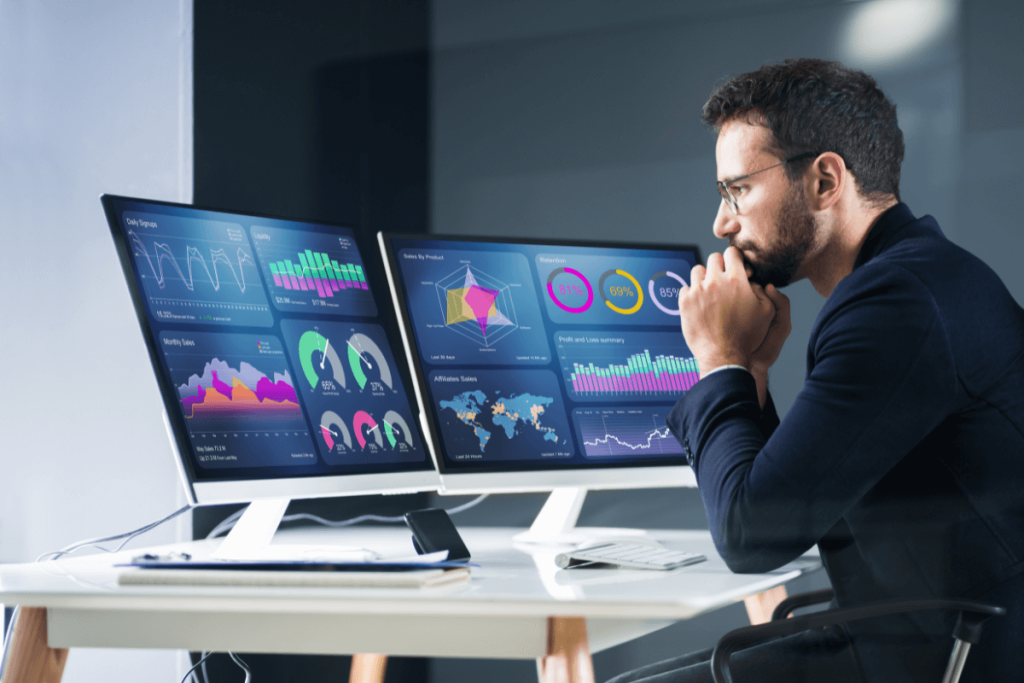
It was Black Friday 2019, and Sarah, the inventory manager of a mid-sized retail chain, was in panic mode. Her team had stocked up on winter jackets based on last year’s sales data. But this year, an unseasonably warm November left warehouses overflowing with unsold inventory. Meanwhile, their competitors, armed with AI-driven demand forecasting, had adjusted their stock in real time, capitalizing on the sudden demand for lightweight apparel. Sarah’s company lost millions in markdowns and missed sales opportunities. Fast forward to today, retailers like Sarah’s are no longer flying blind. Thanks to predictive analytics, businesses can now anticipate demand shifts, optimize inventory, and stay ahead of market trends. But how did we get here? And how can retailers harness this power effectively? Let’s dive in. Traditional demand forecasting methods often struggle to keep up with rapid market changes, fluctuating consumer behavior, and global supply chain disruptions. Businesses relying solely on historical sales data and manual forecasting techniques face inventory inefficiencies, stockouts, and revenue losses. Netwin’s AI-driven solutions help businesses overcome these challenges by leveraging predictive analytics, enabling smarter, data-driven decisions. How Predictive Analytics Transforms Demand Forecasting Predictive analytics uses AI, machine learning, and real-time data insights to analyze historical and current data, identifying patterns that forecast future demand with greater accuracy. Unlike traditional methods, which rely mainly on past sales, predictive analytics integrates multiple data sources, including: Combining these data points, our AI-powered solutions can enable businesses to shift from reactive decision-making to proactive strategies.
AI-Driven Dynamic Pricing: The Smart Way to Optimize Retail Profitability

Is your retail business facing difficulty competing with your competitor’s pricing strategy? Market price inconsistencies, competition, expense changes, and ineffective work approaches can cause loss of income, competitive edge, and productivity. If any of these problems seem familiar to you, then it’s time to consider using AI dynamic pricing technology to help resolve the issues. This AI-powered pricing solution uses your available data, modern analytics technology, and automation work to enable you and many other retailers to enhance profit margins, competitiveness, operational efficiency, and income. With the new faster and smarter approach, you can master your business’s pricing policy and revenue. Pricing strategy should not just meet a price point, but solve a problem and add value. In this article, we are going to discuss real life use situations of AI dynamic pricing and how it works. Along with that, we will learn step by step its impacts on a retail business. Limitations of Traditional Pricing Strategies For decades, retailers have relied on static pricing models to set product prices. These strategies typically involve: While these methods may have worked in the past, they no longer meet the demands of the modern, digital-first consumer. The biggest limitations include:
How Healthcare Data Platforms Are Transforming Patient Care
The healthcare industry has long faced challenges with fragmented and siloed data, leading to inefficiencies, delays, and miscommunication between care teams. But with the rapid advancement of digital technologies, the emergence of unified healthcare data platforms has been a game-changer. It ensures that patient information is seamlessly integrated across systems. In a world where time and accuracy are critical, these platforms provide healthcare providers with a single, cohesive view of patient history. This helping improve patient care, reduce costs, and enhance operational efficiency. In this blog, we will explore how unified healthcare data platforms are revolutionizing patient care and why they are considered the future of healthcare. What Are Unified Healthcare Data Platforms? Unified healthcare data platforms are cloud-based systems designed to aggregate and integrate diverse data sources, including electronic health records (EHR), imaging data, laboratory results, real-time health monitoring, and telehealth information. These systems enable healthcare organizations to centralize and standardize patient data, making it easily accessible and actionable for care teams. The integration of technologies like cloud computing, AI, and machine learning is essential in these platforms. Cloud platforms suc h as AWS HealthLake and Microsoft Azure Health Data Services are key players in this transformation, providing scalable, secure, and interoperable solutions. By 2025, 75% of healthcare providers are expected to use cloud-based platforms for healthcare data management. According to MarketsAndMarkets, the healthcare data platform market is expected to grow at a compound annual growth rate (CAGR) of 22.6%, reaching $120 billion by 2027. How Unified Data Platforms Are Transforming Patient Care? Unified healthcare data platforms are reshaping the way healthcare providers approach patient care by enabling faster, more accurate decision-making. Integrated data platforms in healthcare are associated with a 20-30% improvement in patient outcomes, as they enable faster and more accurate diagnoses. Let’s look at the key ways these platforms are transforming healthcare: Personalized Treatment Plans By centralizing patient data from multiple sources, unified platforms enable healthcare providers to leverage AI and predictive analytics to personalize treatment plans. With access to detailed historical and real-time health data, physicians can develop more tailored treatments that account for the individual’s unique health needs. For example, AI-driven oncology platforms use genetic and health data to determine the most effective treatment for cancer patients, reducing the trial-and-error approach and improving outcomes. Faster Diagnoses and Treatment Decisions In urgent care settings, time is critical. Unified healthcare data platforms eliminate delays by providing real-time access to lab results, imaging data, and patient histories. For instance, a cardiologist can immediately access a patient’s diagnostic test results, EKG, and imaging data, making quicker and more informed decisions. Real-time alerts from integrated systems also notify physicians when a patient’s condition requires urgent attention, significantly speeding up response times. Proactive and Preventive Care Using data analytics, unified healthcare data platforms facilitate predictive healthcare, where risks are detected early. For example, AI models can analyze trends in vital signs and lifestyle factors to predict the onset of chronic conditions like diabetes, enabling early intervention and reducing hospital admissions. In remote care, IoT-enabled devices can transmit data about a patient’s vitals directly to healthcare providers, allowing proactive management of chronic conditions such as hypertension and asthma. Enhanced Collaboration Among Providers Unified data platforms break down communication barriers between specialists, primary care physicians, and caregivers. This collaboration ensures that all parties involved in a patient’s care have access to the same accurate and up-to-date information. For example, patients with complex conditions like cancer may require input from oncologists, surgeons, and radiologists. A unified data platform allows all these specialists to view the same diagnostic information, improving collaboration and minimizing errors. Remote Patient Monitoring and Virtual Health With the rise of telemedicine, unified healthcare data platforms are critical for integrating remote monitoring devices and virtual health consultations. Patients with chronic conditions can now have their vitals monitored from home, while healthcare providers receive real-time data to make timely decisions. The remote patient monitoring market is expected to grow from $1.8 billion in 2020 to $9.7 billion by 2027, reflecting an increase in the use of telemedicine and IoT-enabled devices. For example, patients with diabetes can use a glucose monitor connected to the platform, enabling healthcare teams to intervene immediately if glucose levels exceed or fall below safe thresholds. The Importance of Unified Data Platforms in Future Healthcare Systems As the healthcare industry evolves, patient expectations for quick and transparent care are growing. Unified healthcare data platforms support this shift by ensuring that patient data is accessible, accurate, and up-to-date. These platforms also facilitate compliance with global healthcare standards, including the FHIR (Fast Healthcare Interoperability Resources) standard for health data exchange. Moreover, with the increasing volume of data generated by wearables, genetic testing, and telemedicine, unified platforms provide the scalability needed to handle this information while ensuring data integrity and security. Benefits of Unified Healthcare Data Platforms Unified healthcare data platforms offer numerous benefits to healthcare organizations, patients, and care teams alike: Healthcare organizations that effectively integrate data across systems see up to a 40% improvement in operational efficiency. Key Trends in Unified Healthcare Data Platforms As healthcare continues to innovate, the following trends are shaping the future of unified data platforms: AI-Driven Insights and Predictive Analytics: AI is playing a crucial role in transforming healthcare. By analyzing vast amounts of patient data, AI models can predict disease progression and recommend optimal treatment options. In oncology, AI is already being used to identify patterns in genetic data and assist with personalized treatment planning. Cloud-Enabled Interoperability: Cloud platforms such as AWS HealthLake and Microsoft Azure Health Data Services are facilitating the integration of data across disparate systems, enabling seamless collaboration between healthcare organizations and improving data accessibility. Voice-Enabled and NLP Technologies: Natural Language Processing (NLP) and voice recognition are revolutionizing data entry and retrieval. Providers can now use voice commands to update patient records or retrieve information from the system, streamlining administrative processes. Genomics and Precision Medicine: Unified healthcare data platforms enable better integration of genomic data, allowing for precision medicine that