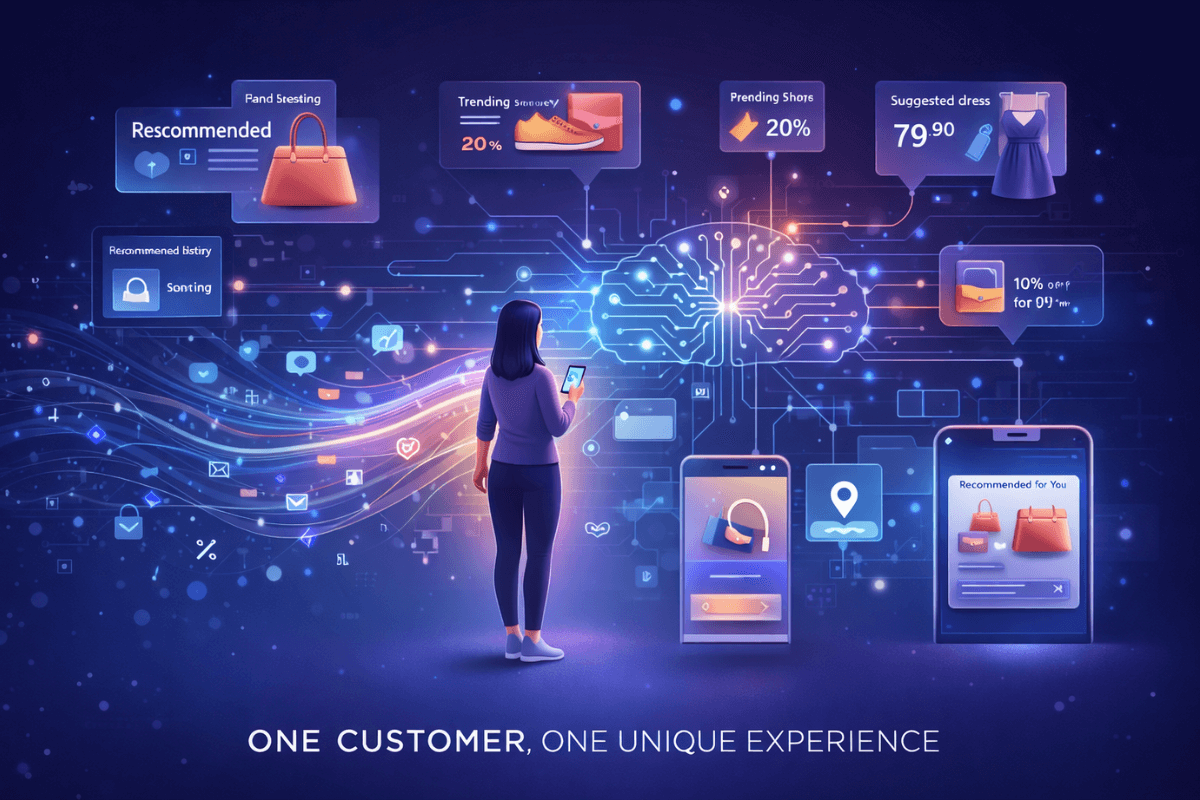

Unified Data Architecture is quickly becoming one of the most important foundations for enterprise transformation. Over the past decade, digital transformation has pushed organizations to modernize operations, adopt automation, and move workloads to the cloud. But despite these advancements, one fundamental challenge has persisted across enterprises of every size and industry:
Data remains deeply fragmented.
Customer data sits in CRM systems, operations data lives in ERPs, sales and marketing run on different dashboards, finance builds separate reports, and product teams gather their own telemetry altogether.
Even with cloud adoption and analytics investments, most enterprises still operate with data silos, disconnected schemas, duplicated records, and inconsistent reporting.
But 2026 is shaping up to be the turning point. The year organizations finally unify their data, break silos, and build a foundation that supports true intelligence.
This is not a prediction based on hype.
It’s based on five undeniable market shifts converging at the same time.
In 2026, Unified Data Architecture (UDA) will no longer be optional, it will be the backbone of every intelligent enterprise.
Let’s explore what’s driving this global shift.
1. AI Adoption Is Accelerating
AI is moving from isolated use cases to becoming an enterprise-wide capability. But the organizations seeing the most impact aren’t the ones experimenting with the latest model, they’re the ones building strong foundations underneath it.
At Netwin, we consistently see a pattern across digital and AI engagements: the real barrier isn’t AI readiness, but data readiness. When data is fragmented, even the most advanced AI struggles. When data is unified, AI accelerates naturally.
This shift is why enterprises in 2026 will invest heavily in Unified Data Architectures.
Not for the sake of modernization, but because AI now demands it.
2. Real-Time Decisions Is Becoming the Default Operational Standard
Leaders are moving away from retrospective reports and toward real-time visibility. As enterprises evolve, the expectation for live intelligence is rising, especially in operations, supply chains, customer experience, and finance.
In modernization programs we deliver at Netwin, this has become the strongest recurring theme. Enterprises no longer want dashboards that summarize the past; they want systems that interpret the present and anticipate what’s next.
Unified Data Architecture makes this possible by enabling fast, consistent data flow across the entire business, something static integrations can’t support at scale.
3. Compliance and Governance Are Becoming More Demanding
Regulatory frameworks across banking, insurance, healthcare, and even retail are becoming more stringent, especially around data lineage, auditability, consent, and AI transparency.
Netwin’s work with regulated industries has revealed a clear truth that fragmented data increases the cost and complexity of compliance.
Unified Data Architecture gives enterprises the ability to manage governance centrally, track data movement end-to-end, and maintain clarity even as systems grow. This is why 2026 will be the year many organizations shift from reactive compliance to proactive architecture.
4. Tool Consolidation Will Become a Strategic Goal
After years of rapid SaaS adoption, enterprises are now dealing with tool sprawl, disconnected workflows, duplicated data, and escalating integration costs.
CIOs and CTOs are shifting toward simplification. Not fewer tools, but smarter unification.
During transformation discussions at Netwin, technology leaders increasingly ask the same thing: “How do we reduce complexity without disrupting teams already dependent on existing systems?”
Unified Data Architecture provides the path forward. It brings tools together through a structured, intelligent backbone, giving the business a single view even when applications remain diverse.
5. The Rise of Intelligent Transformation
Digital transformation focused on taking offline processes online. Intelligent transformation, however, focuses on making those processes adaptive, predictive, and insight-driven.
As we help enterprises transition toward intelligence, through AI-led automation, real-time insights, and modern engineering, one insight becomes clear:
Intelligence doesn’t thrive on disconnected data. It thrives on unified, high-quality, continuously flowing data.
That’s why 2026 will be the year enterprises treat Unified Data Architecture not as a tech initiative, but as the strategic backbone of every intelligent system they plan to build.
Why Unified Data Architecture Is No Longer Optional
Enterprises are realizing that fragmented data costs more than just inefficiency. It slows down innovation, limits AI adoption, creates compliance risk, and prevents leaders from seeing the full picture. Unified data architecture is becoming essential because it tackles these challenges through a single, coherent framework.
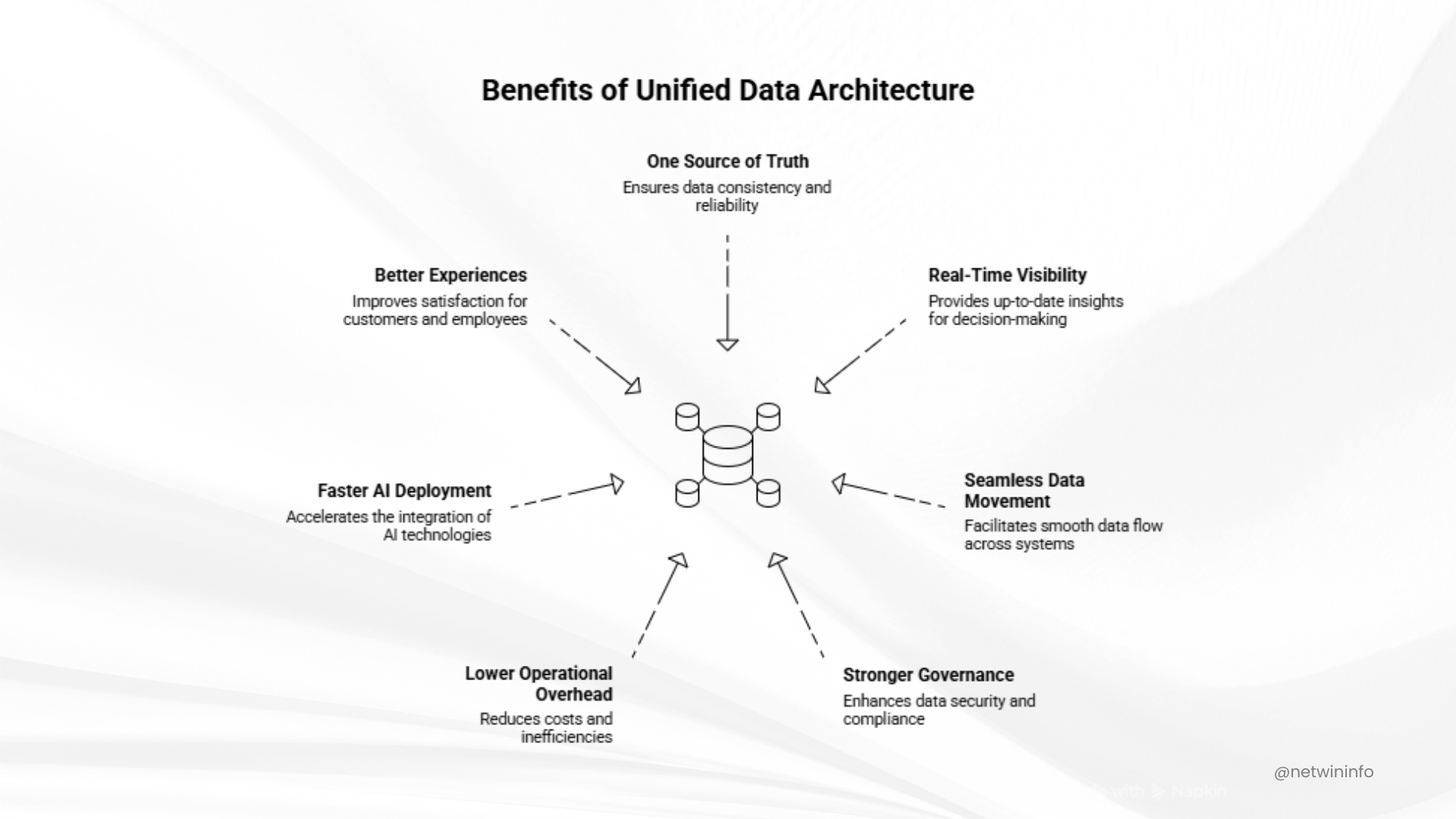
A unified architecture brings:
- One source of truth
- Real-time visibility
- Seamless data movement
- Stronger governance
- Lower operational overhead
- Faster AI deployment
- Better customer and employee experiences
It’s not just a technology upgrade; it’s an architectural shift that enables every other transformation initiative.
Conclusion:
The pressure for speed, intelligence, compliance, clarity, and personalization is rising. The technology to support unification is mature. And the business value is now undeniable.
2026 will not just be another year of digital advancement, it will be the year enterprises finally build the foundation that everything else depends on.
And that foundation is Unified Data Architecture.
If your organization is planning its next transformation chapter and wants to strengthen the foundation behind AI, analytics, and intelligent operations, we’d be glad to share what we’re seeing across industries.
Let’s explore how Unified Data Architecture can accelerate your 2026 strategy.